Building Skylines, Fleeing Missiles: Invisible Victims of the GCC War
(Reflections on the GCC crisis, Nepal's migrant workers, and the silences in between — from a student of international relations working at the intersection of labour migration and communication.)
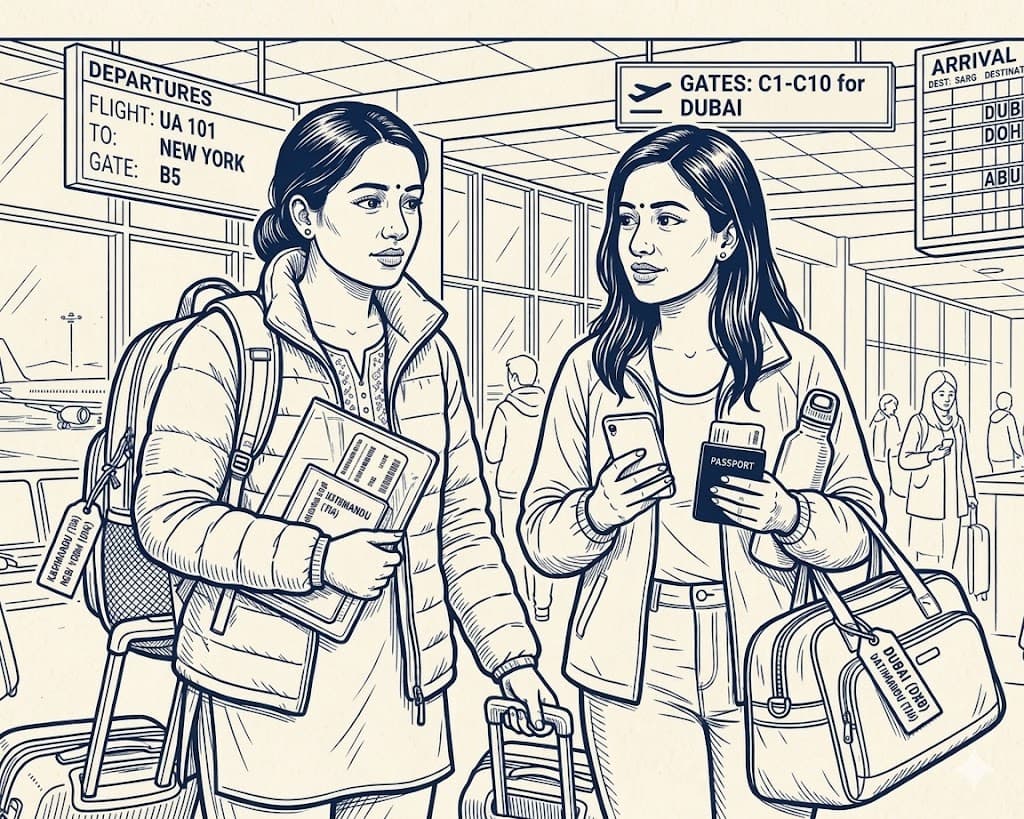
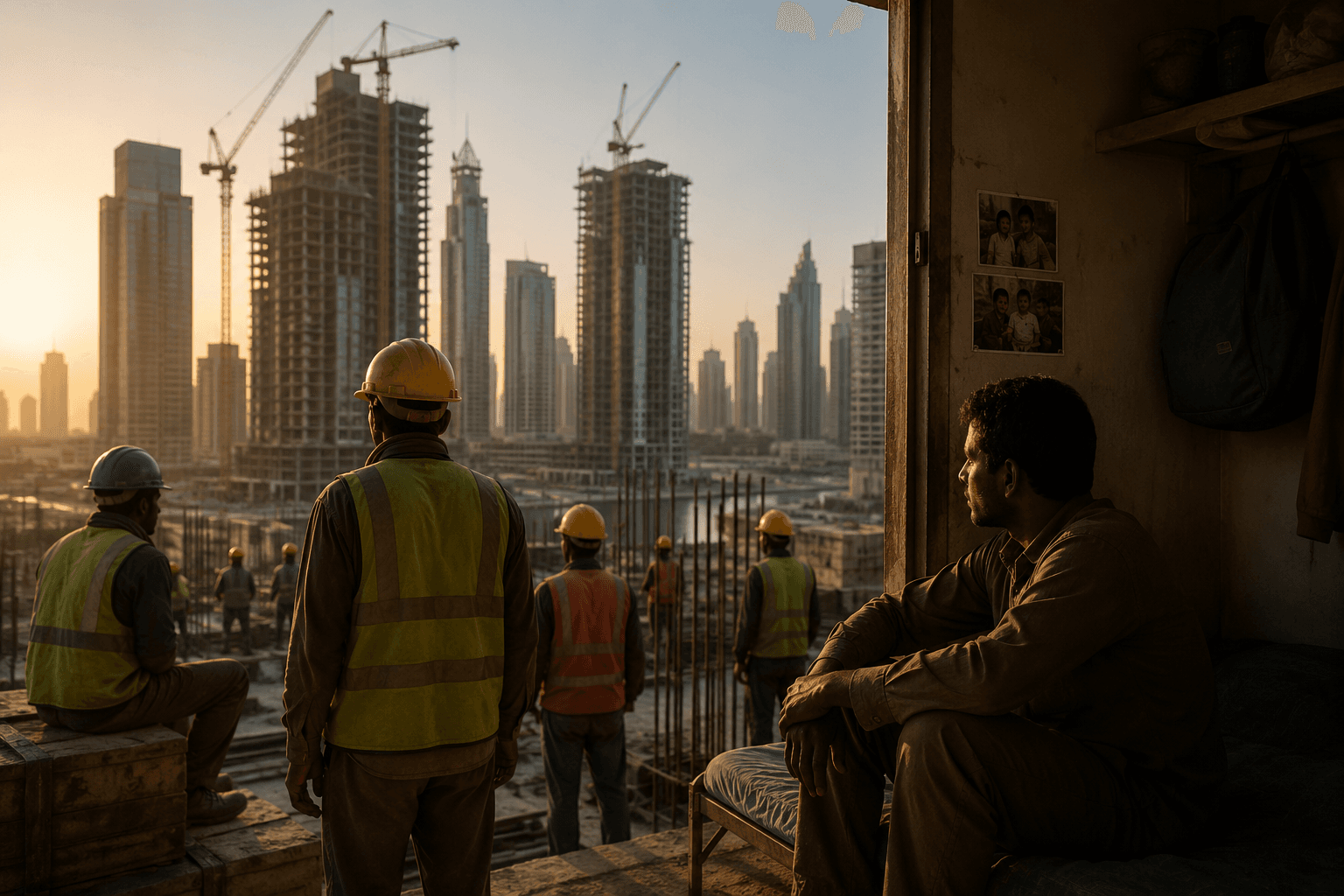
When I began studying International Relations, I was taught to see conflict through the grammar of states: alliances, deterrence, escalation ladders. But four months of tracking the fallout of the West Asia war has taught me that the most consequential actors in this crisis have no seat at any negotiating table. They are the roughly 1.9 million Nepali workers scattered across the Gulf — the cooks, construction workers, and drivers whose lives were upended by a war they had no part in starting. Forget the remaining millions of workers from other countries.
A War Arrives at the Workplace
On 28th February 2026, the United States and Israel launched a joint military campaign against Iran. Tehran's retaliation came swiftly — missile and drone strike on US military facilities across Qatar, Saudi Arabia, Bahrain, Kuwait, the UAE, and Oman. For the Gulf's vast migrant workforce, the front line ran straight through their job sites.
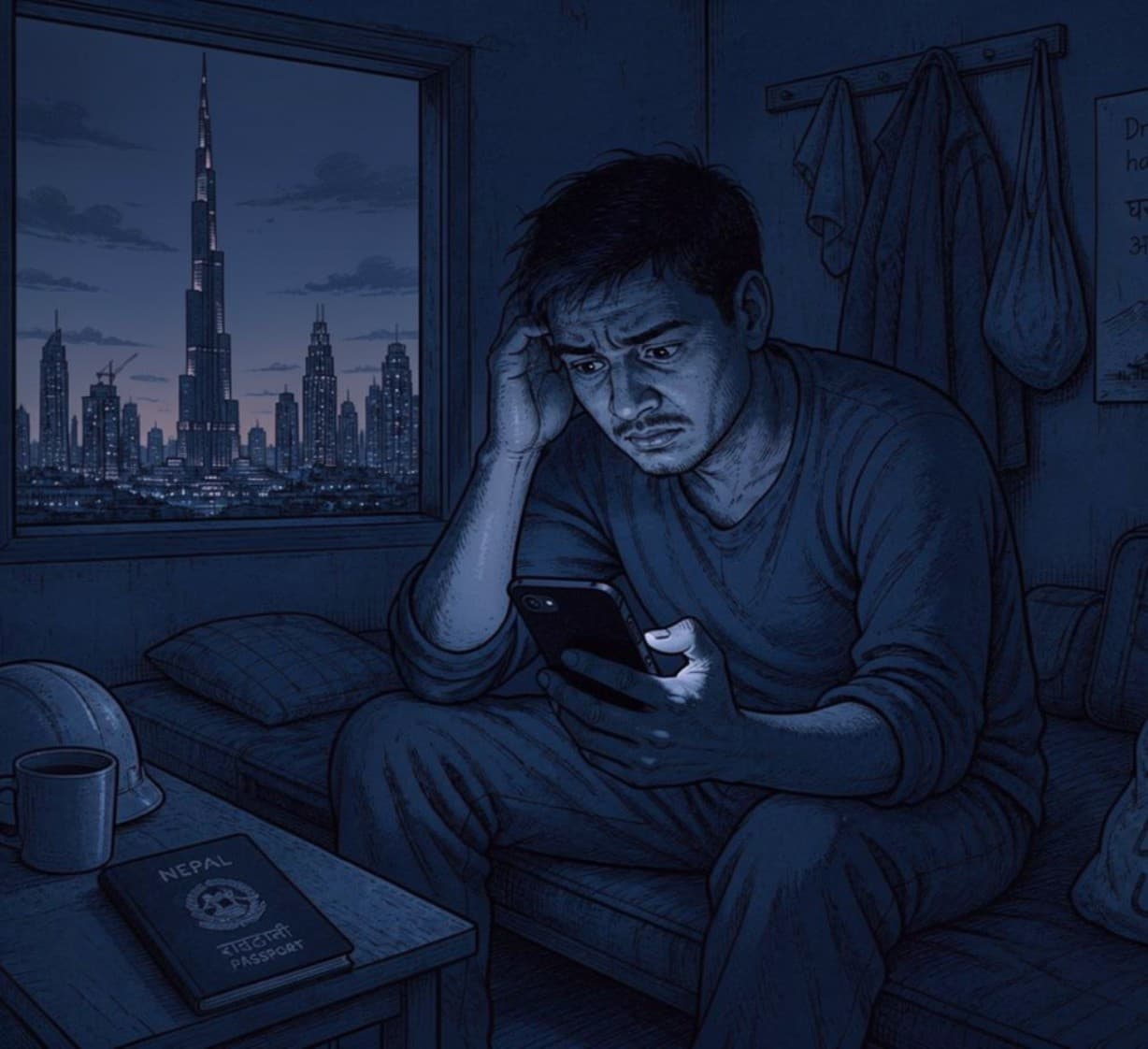
The testimonies are difficult to read. Kiran Kumar Rana Magar (name changed), a Nepali construction worker in Abu Dhabi, described missiles falling "in different places" and "a lot of fear." The UAE Ministry of Defence later confirmed the death of a Nepali national, alongside a Bangladeshi and a Pakistani. Since the war broke out, we at Shramik Sanjal have regularly been engaging with the workers in the GCC, and their accounts revealed extreme wartime vulnerability, with little or no protection from employers or host governments, other than the incessant security alerts. In April, the human rights organisation MRRORS interviewed fifteen migrants working at gas plants, refineries, airports, and schools across the GCC; their findings echoed our conversations with the workers.
Even where the missiles did not fall, the economic shockwaves did. A worker from Mahottari at an Ajman resort was placed on ten days of unpaid leave along with his entire staff. A Kuwait-based restaurant worker described slashed hours, a closed airport, and ticket prices too high to escape. An ILO analysis projects that the war will destroy jobs worth USD 1.2 trillion in 2026 alone, with Asia-Pacific hit hardest — and warns that even an immediate end to fighting cannot undo the damage already done to energy prices, supply chains, tourism, and remittance flows.
The Hierarchy of Protection
What strikes me most as a student of IR is not the violence itself but the quiet architecture of exclusion beneath it. Human Rights Watch documented how Bahrain paid a month's salary to insured nationals from its Unemployment Insurance Fund — reaching nearly 95 percent of eligible citizens — while explicitly excluding migrant workers who make up three-quarters of the private workforce and had contributed to that very fund for years. One Nepali worker, his wages falling and costs rising, sent his family home. "The majority of my colleagues have sent their family members back home," he said.
This is what scholars call differentiated citizenship in practice: the same crisis, two classes of victim. And it compounds a burden migrants carried before any missile flew — recruitment loans of 300,000–400,000 Nepali rupees, debts that follow returnees home and shadow their mental health long after the journey ends.
Nepal’s Response: Motion Without Machinery
Nepal cannot be accused of inaction. Within days of the escalation, the government formed an Emergency Response Team, suspended labour permits to ten West Asian destinations, and later established an Inter-Ministerial High-Level Task Force to map workers in high-risk zones. In May, it launched the MoFA Mitra app, letting citizens abroad file rescue requests, track grievances, and communicate directly with missions. Over 86,000 workers have registered for emergency assistance, and 318 stranded workers were airlifted from Kuwait on a single chartered flight in early April.
But motion is not machinery. The Department of Foreign Employment described itself in March as "just an executing agency" with no established mechanism for rescue and repatriation. Recruiting agencies confirmed that employers take no responsibility. Most damningly, Nepal's repatriation flights require workers to pay their own airfare — while the Philippines covers repatriation costs for distressed overseas workers can fund airfare for stranded nationals. Nepal's remittances rose from 13.3 percent to 41.2 percent to Rs. 1,916.90 billion in ten months of this fiscal year; the state that depends on these workers' earnings asks them to finance their own escape.
Why Communication Is the Missing Infrastructure
Working at the junction of migration and communication, I keep returning to one insight: information is protection. The workers who suffered most were those who learned of advisories late, could not reach their missions, or did not know what assistance existed. The MoFA Mitra app matters precisely because it treats communication as consular infrastructure, not an afterthought. But an app cannot substitute for a funded repatriation mechanism, bilateral protection agreements, or a voice in the regional forums where migrant welfare is decided.
At an ILO dialogue in May, Nepal's labour secretary acknowledged that "systems must evolve, policies and institutions must adapt." As Shramik Sanjal put it, these words remain a promise. For the workers who paid their own way home from a war zone, promises are not yet reality — and for those of us studying how states treat the people who sustain them, this crisis is the syllabus.