Trap: When 'Two Years' Become Decades
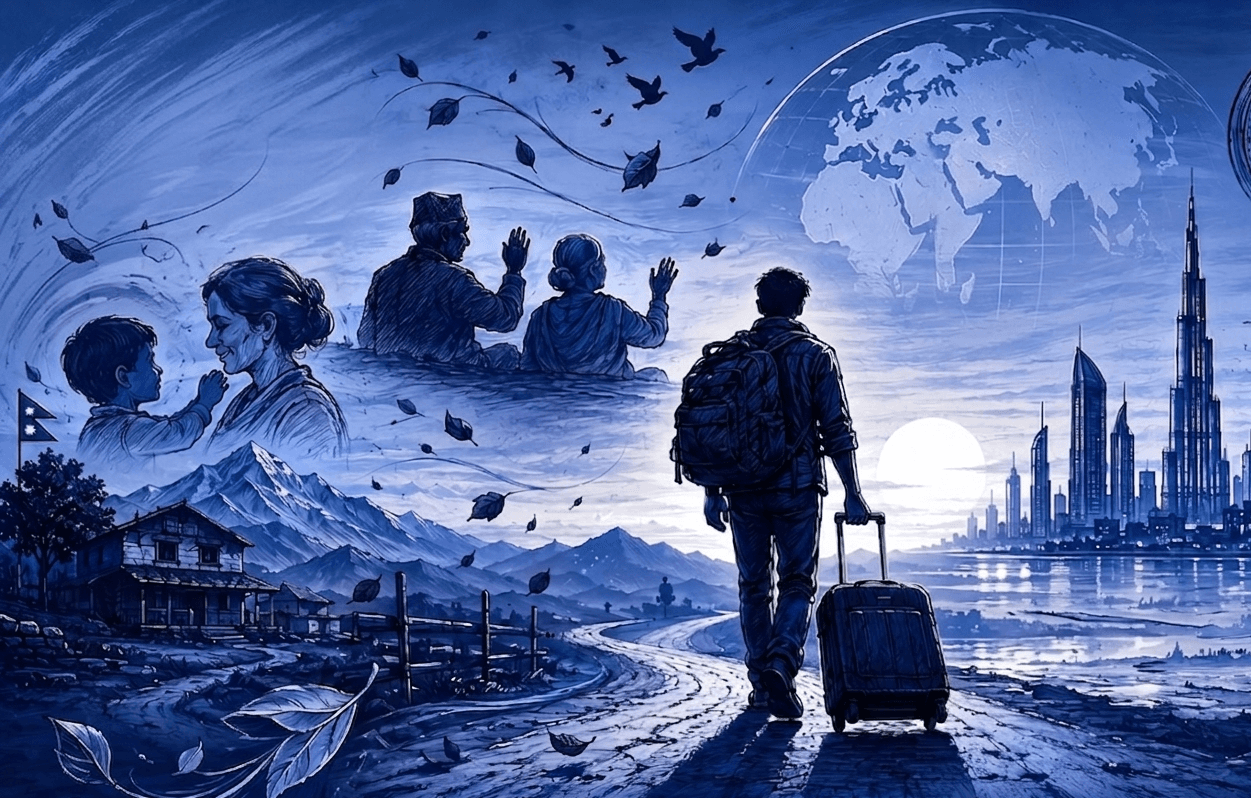
I have been a migrant worker for two years. At least, that is what I thought I would be when I left Nepal in 2008.
Two years, that was the plan. Two years of hard work and separation from family. Two years to earn enough money to support my loved ones, help fund my brother's education, and return home with dignity. Like countless migrant workers, I believed migration was a temporary journey, a short chapter of hardship before returning home to a better future.
But time has its own plans. Days turned into weeks. Weeks became months. Months became years. The "two years" I carried in my mind slowly stretched into a journey without a clear end. Before I realized it, more than sixteen years had passed.
Today, I find myself balancing the sheet of my life.
On one side are the dreams fulfilled, the responsibilities carried, and the opportunities created. On the other side are the moments missed, the relationships tested by distance, the memories that exist only through photographs and video calls, and the silent cost paid by the soul.
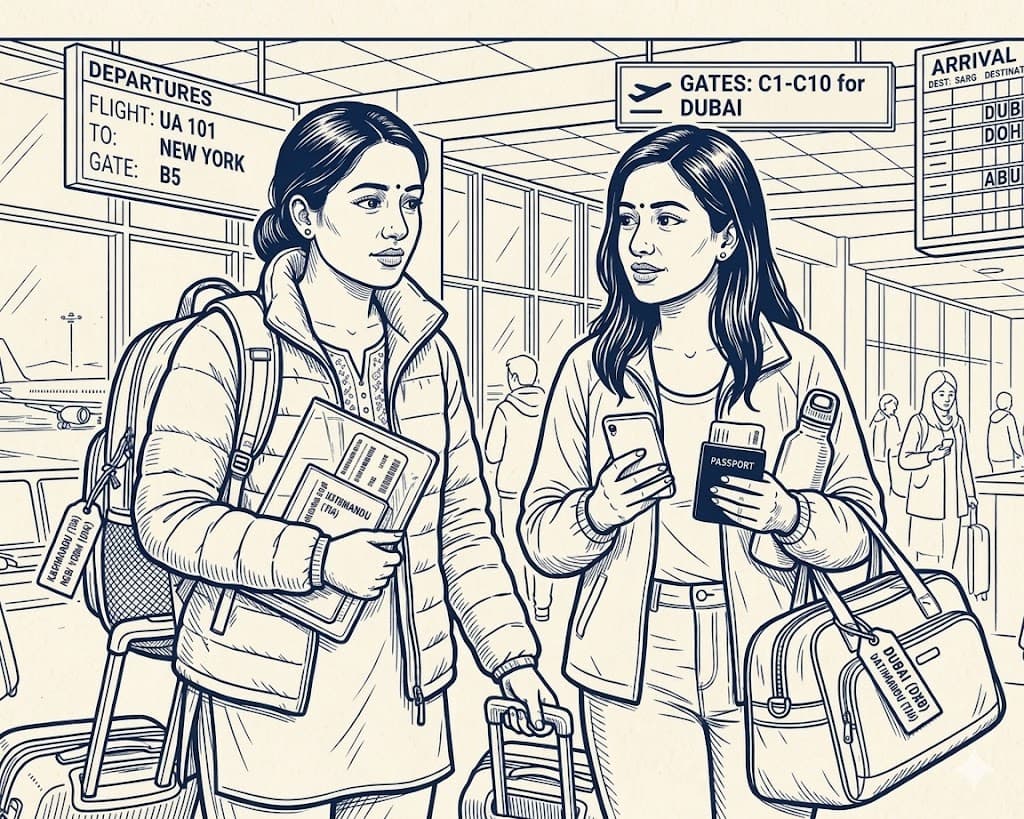
When I first left Nepal, I was young, inexperienced, and unaware of the realities of labor migration. Like many aspiring migrant workers, I trusted the promises made by recruitment agencies.
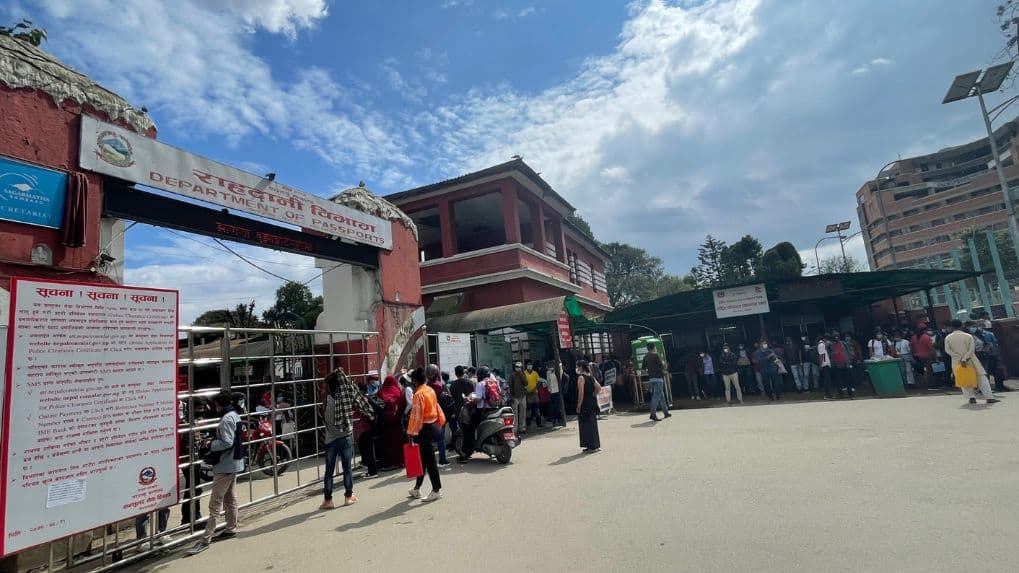
I paid NPR 40,000 for a visa. The recruitment process lacked transparency and fairness. I was directed to medical facilities that charged excessive fees. The employment contract I signed before departure proved meaningless once I arrived in the Gulf. The promises made during recruitment did not match the reality that awaited me. Perhaps, my naivety as a first-time migrant got over me; the aforementioned recruitment practices was the agreed-upon norm back then.
Like many migrant workers, I knew little about migration laws, labour rights, or the protections that should have been available to me. I simply wanted an opportunity to work and support my family.
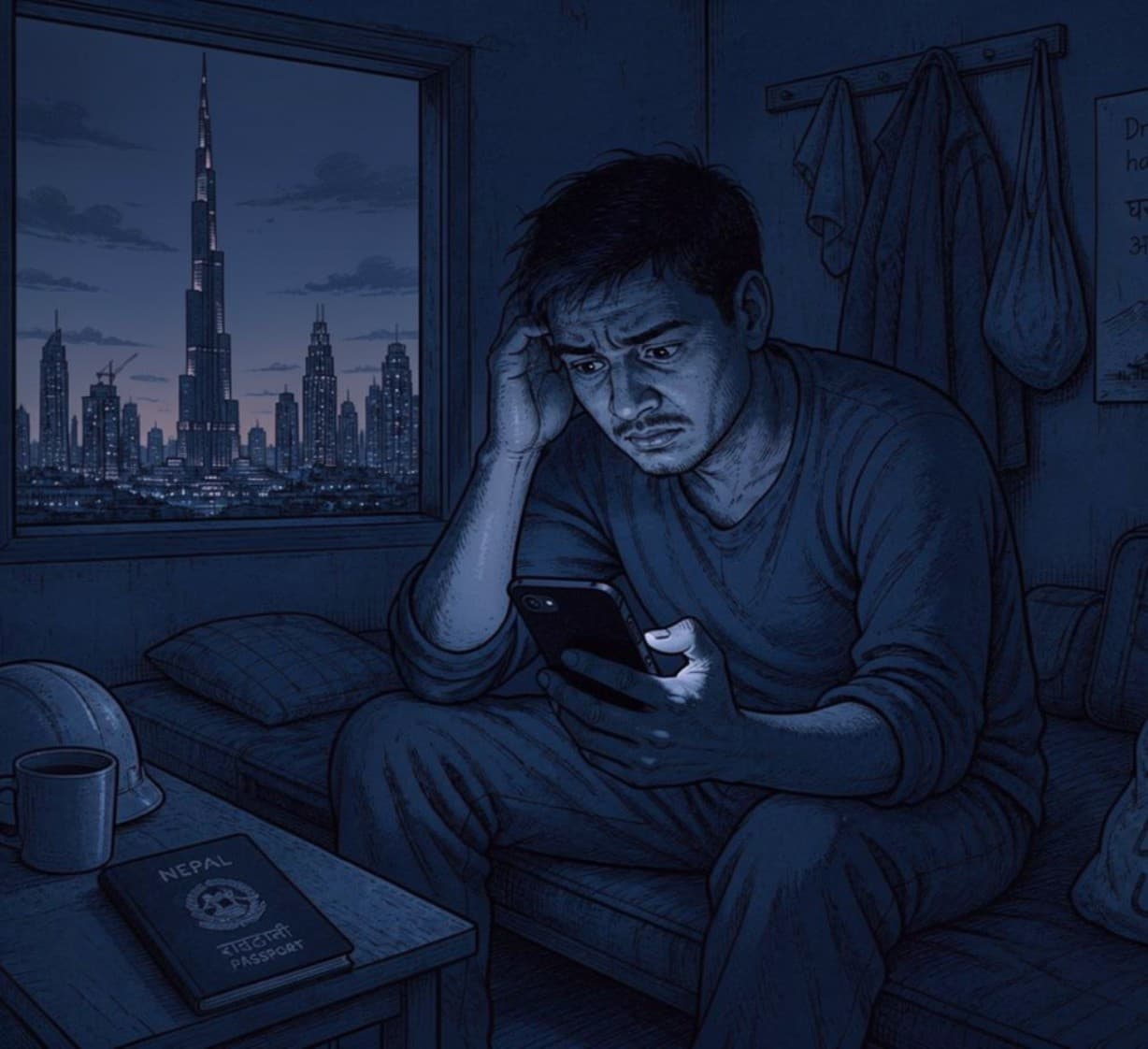
Upon arriving in the UAE (later I moved to Kuwait), I surrendered my passport to my employer. For weeks, my identity was reduced to a fragile piece of paper bearing a company stamp until I eventually received my Emirates ID. Looking back, it is difficult to explain the vulnerability of living in a foreign country without your passport, without understanding your rights, and without knowing where to seek help.
The challenges did not stop there.
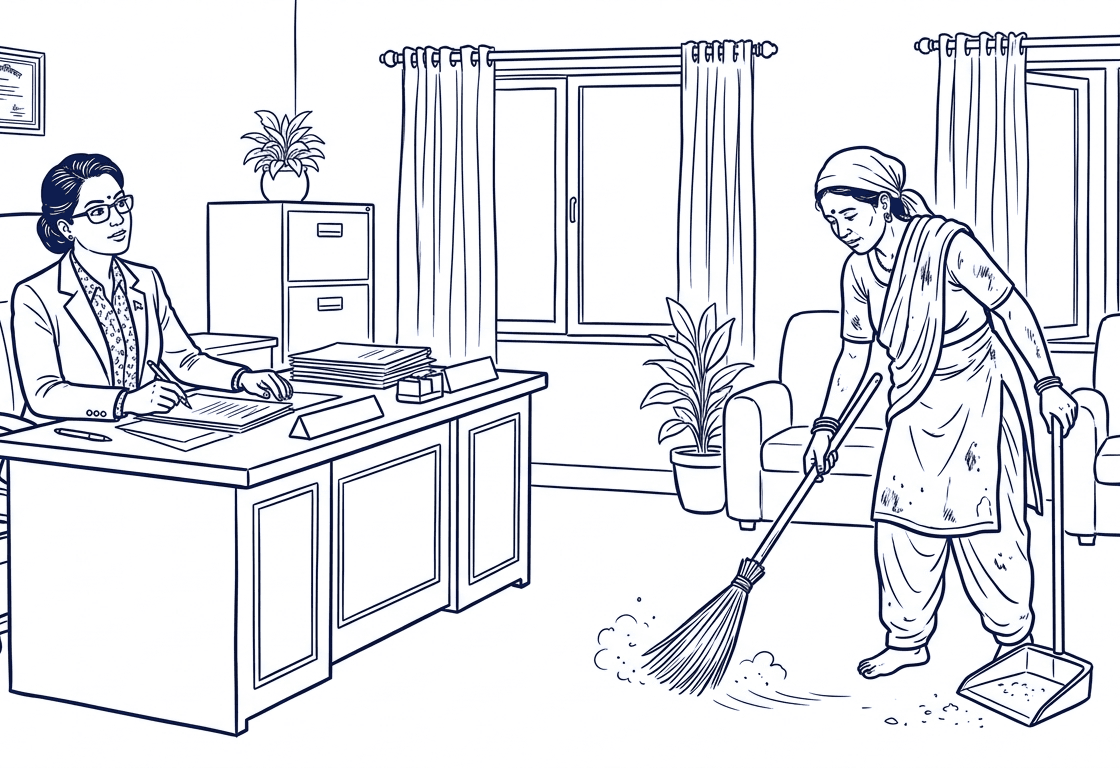
Long working hours became normal. Weekly rest days were uncertain. There were moments of unfair treatment, discrimination, and behavior that reminded us that migrant workers often occupy the lowest rung of society. Many of us remained silent because we feared losing the very jobs that sustained our families back home.
Yet we endured. We endured because our parents depended on us. We endured because our children depended on us. We endured because entire households, villages, and communities depended on the money we sent home. Alas! I learnt it hard way.
Migration is often celebrated through statistics. Governments proudly announce remittance figures. Economists discuss contributions to national development. Reports highlight billions flowing into economies.
But behind every remittance is a human story. Behind every penny sent home is a worker who skipped a meal, worked overtime, sacrificed a holiday, delayed a dream, or carried loneliness in silence.
The true cost of migration cannot be measured in money.
It is measured in missed birthdays. It is measured in children growing up through phone screens. It is measured in aging parents whose faces change faster than our annual visits home. It is measured in weddings missed, funerals attended virtually, and memories that can never be recreated. It is measured in loneliness. It is measured in silence. And often It is measured in the gradual erosion of one's soul.
As the years passed, another reality emerged, one that few people openly discuss. Migration changes not only where we live but also who we become. The longer we stay away, the more complicated our relationship with home becomes.
“Two decades gone, I left my place, chasing dreams in a far-off space.”
Like millions of migrant workers, I left with hope in my heart and dreams in my luggage. I imagined that sacrifice would be temporary and that one day I would return home and continue where I had left off.
But life does not wait. People change. Families change. Communities change. And migrants change too.
“With joy and tears, I journeyed long, now I feel I don't belong.” Perhaps this is one of the most painful truths of migration.
After spending years abroad, many migrant workers discover that they no longer feel completely connected to either world. The country they left behind has changed. Friends have moved on. Communities have evolved. Families have adapted to life without them.
Yet in the country where they work, they are often reminded that they are temporary residents, valued for their labor but rarely considered part of the social fabric.
We become people living between two homes, yet fully belonging to neither. Today, this feeling has become even stronger because of the uncertainty facing migrant workers across the Gulf region.
For decades, the Gulf has represented hope for millions of workers from Nepal, India, Bangladesh, Pakistan, Sri Lanka, the Philippines, and many other countries. It has provided opportunities to escape poverty, support families, educate children, and build futures.
Yet recent years have also brought new anxieties. Regional conflicts, geopolitical tensions, economic uncertainty, rising living costs, workforce nationalization policies, changing labor markets, and concerns about future employment have created a growing sense of insecurity among migrant communities.
Every news headline about conflict, economic slowdown, or instability is received differently by migrant workers.
Others may see politics.
Migrants see questions.
Will my job still be there tomorrow? Will I be able to renew my contract? Will I continue to support my family?
Will I be forced to return home before I am ready? Will years of sacrifice disappear overnight?
For migrant workers, uncertainty is not simply a news story. It is a threat to the survival of entire families who depend on income earned abroad.
“I’m heading back for a short stay, but home feels so far away.”
For many migrant workers, returning home is no longer as simple as buying a ticket and boarding a plane. Home exists in memories, photographs, and longing. Years of separation create emotional distances that are often harder to bridge than physical ones.
Parents age. Children become adults. Loved ones build lives in our absence. And when we finally return, we sometimes feel like visitors in the places we once knew by heart.
“In search of better days, I strayed, and now my roots seem to fade.”
Migration often demands a silent sacrifice of identity. We adapt to survive. We learn new cultures, new languages, and new ways of life. Yet in the process, something within us slowly changes.
Many migrant workers begin to wonder where they truly belong.
“My leaves float high, lost in the breeze, searching for a land to ease.”
This image perfectly captures the migrant experience.
We move where opportunities take us. We follow contracts. We follow responsibilities. We follow survival.
Yet deep inside, many of us continue searching for a place where we can simply belong without conditions.
“The place I left, the place I stand, neither feels like home or land.” This may be the hidden emotional crisis of migration.
The world often measures migration through economic success, but rarely discusses the emotional cost of living between identities, cultures, and countries.
Migrants contribute to two nations simultaneously, yet often struggle to find a sense of belonging in either.
“Who am I now? Where is my song?”
These questions are not simply personal.
They are questions asked quietly by millions of migrant workers around the world. Questions of identity. Questions of belonging. Questions of purpose. Questions that become louder with every passing year abroad.