Being Comfortable in an Uncomfortable Place
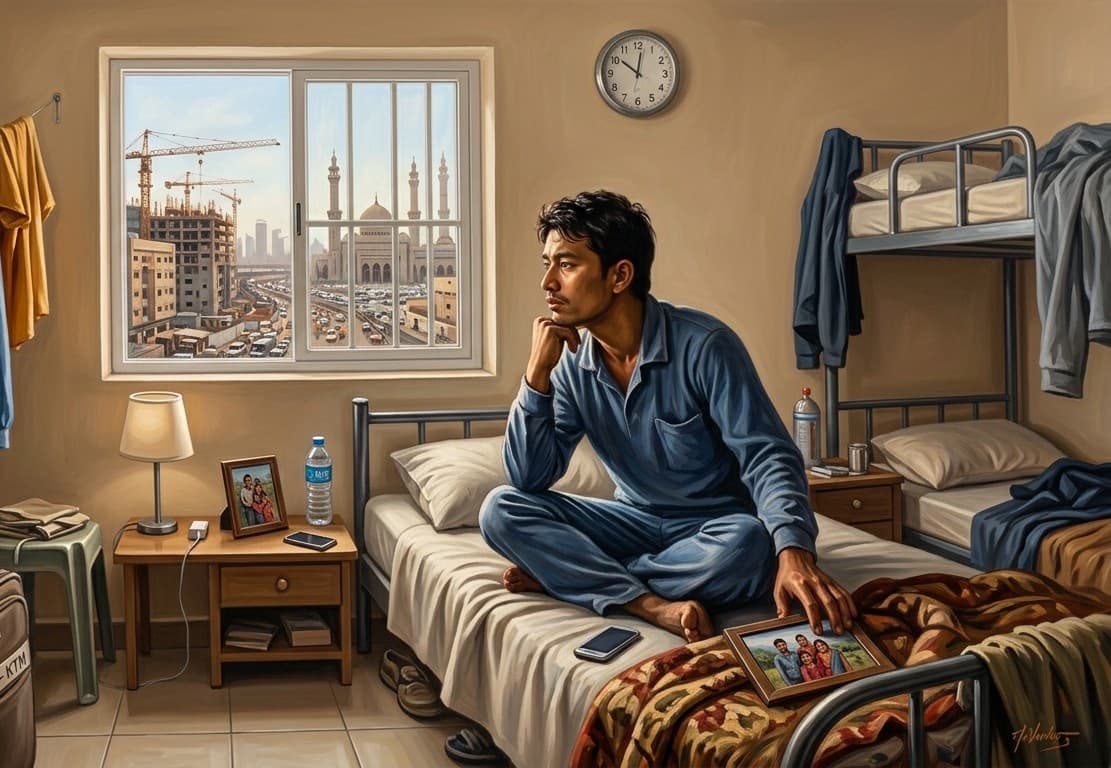
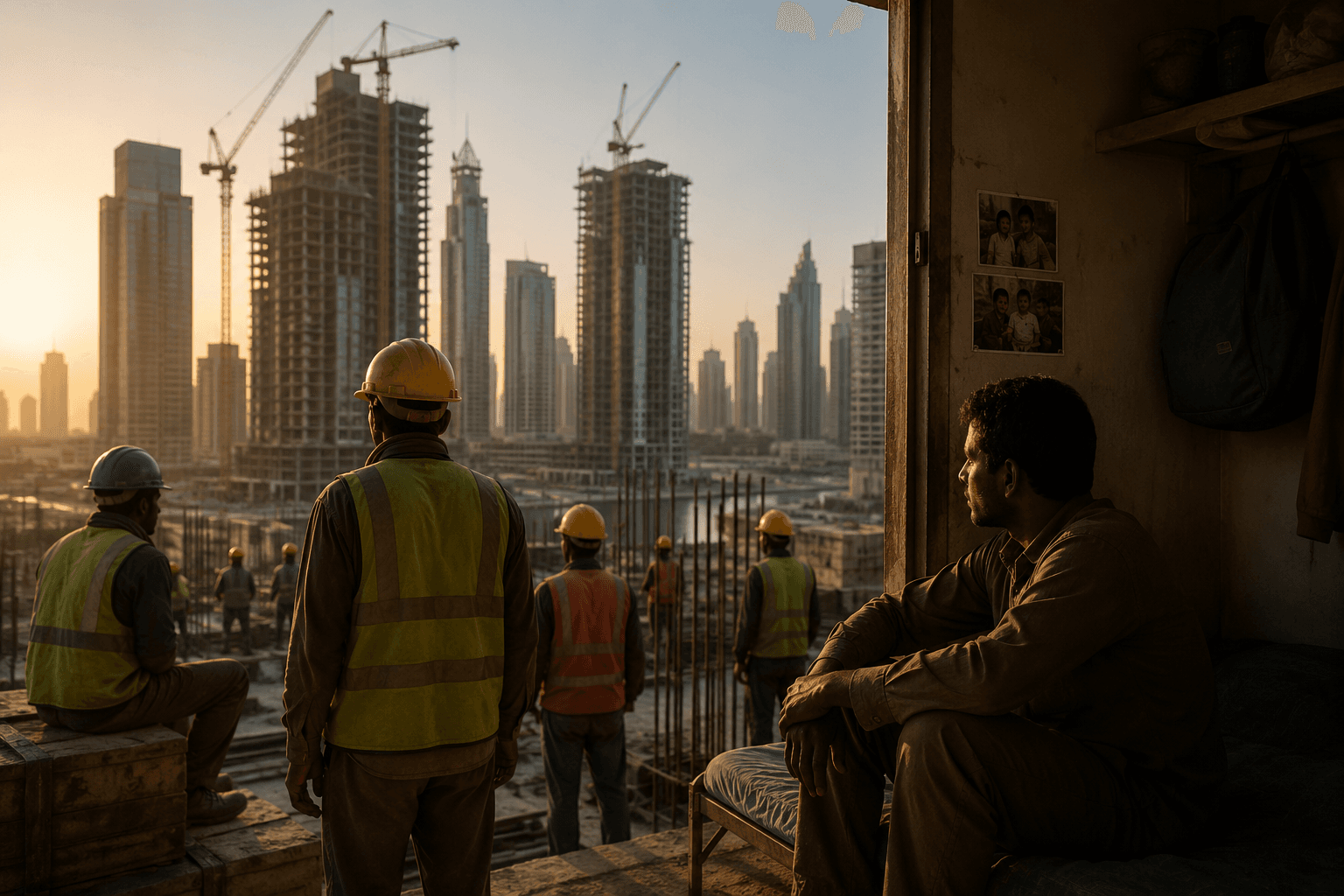
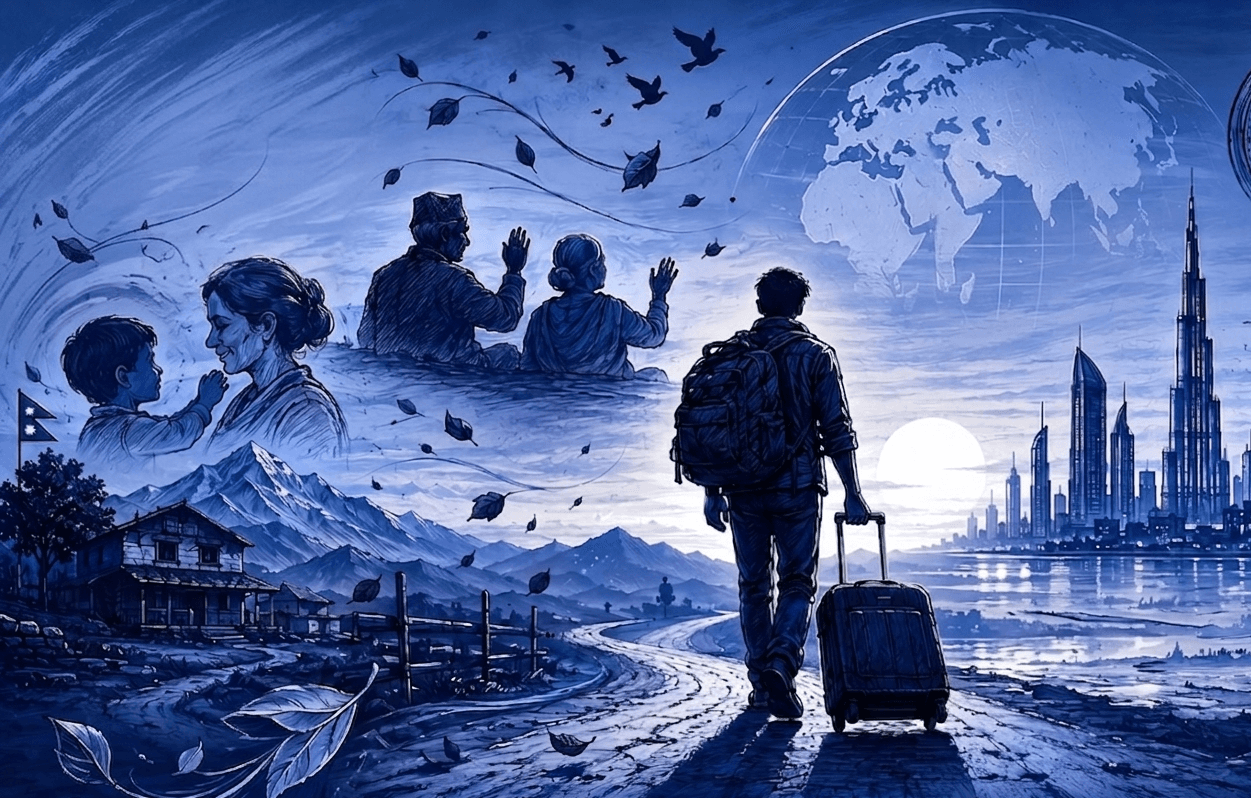
This year, my journey as a migrant worker turns 17 years long—a journey that was only meant to last two years. I never imagined I would stay abroad for so long, but somehow this life has become my new normal. Home has never really felt like home to me. The clarity I had 17 years ago—to finish a migration cycle and return home—has been postponed indefinitely. The uncertainty of a permanent return date haunts me.
Like many other migrant workers, I keep trying to adapt to every new situation, finding comfort in uncomfortable places. Somewhere in this struggle, time keeps flying, and I forget to count the years. Days become months, months become years, and years become decades. Suddenly, a journey that was meant to be temporary starts feeling as if it has no end.
I have tried, more times than I can count, to put a full stop to this journey—to pack it all in and go start something back home. In migrants’ terms, to “finish and return for good.” Alas, it has never worked out. Perhaps after spending years in a routine job, the ability to take risks quietly slips away. I grow used to the comfort of a salary landing at the end of every month, used to sending it home, used to knowing it will meet my family’s needs. Slowly, without even noticing, that routine turns into comfort—a necessitated comfort I am no longer brave enough to break.
I have tried to walk away a few times. But the ability to take risks shrinks when I have a family depending on my income. That dependency becomes my weak point, the one thing that grows heavier every year, right alongside my responsibilities.
I know I am not the only one who feels this way. I have met so many migrant workers standing in this exact same space—caught between wanting to leave and being too afraid to. I have talked to many of my migrant friends over the years, and while every one of them has a different story, the emotions underneath are almost always the same: getting comfortable in an uncomfortable place.
Importantly, it is financial security. Going home means giving up a stable income. Even if it is not a large salary, it is a predictable one, and there is quiet comfort in knowing that at the end of every month money will come in and the family will be taken care of. After years of leaning on that security, walking away from it feels like stepping off a ledge with your eyes closed.
For some, it is family responsibility. Behind every migrant worker is often a family that has slowly, silently become dependent on their earnings—children’s education, aging parents, household expenses, loans, medical bills, and a hundred other things that only keep growing. At some point, going home stops being just your decision to make. You are deciding for everyone who depends on you, and that weight makes it so much harder to walk away.
For others, it is the limited opportunities waiting back home. Many of us left in the first place because there simply was not enough for us there. Our aspirations outgrew the available opportunities. After years abroad, the question creeps in quietly at night: What would I even do if I went back? Would there be work? Would it pay enough to matter? Could I start something of my own? Could I even compete with those who have spent all this time building their careers while I was gone? That uncertainty can feel far riskier than just staying put.
And for a lot of us, especially Nepali migrant workers, there is another reason we rarely say out loud: the political instability back home. When the place you are supposed to return to keeps shifting under its own government, when you cannot be sure what tomorrow looks like there—politically or economically—it becomes just one more reason to stay a little longer, to wait and see, to convince yourself that going home can wait another year.
Then there is the fear of starting over completely. After 10, 15, or 20 years abroad, you have built an entire life around this place—routines, savings, friendships, a certain rhythm of living that took years to find. Going back means tearing a lot of that down and starting from scratch. You might carry the desire to return deep in your chest, but the confidence to begin again is not always something you have. Or at least, not for now.
And maybe the hardest part of all is that home does not wait for you to come back. While you are away, it keeps changing without you. People change. Relationships change. The streets change. Even your own expectations quietly change. You go back one day and realize you no longer completely belong to the place you once called home, because you have changed too—more than you realized. The streets might look familiar, but the life you remember living there simply is not there anymore. There is a strange, lonely feeling of being a stranger in your own hometown, trying to reconnect with people and places that kept moving on without you.
Maybe that is why going home is never as simple as just saying the words “I’m going home.” For some of us, the real question is not when. It is where. Where is home now? Is it the place where we were born? The place where our family still lives? Or is it the place where we have quietly spent most of our adult lives, without ever meaning to? I still do not have an answer. Maybe that is exactly why, after 17 years, I am still here—somewhere between the home I left behind and the life I built far away from it.
A journey that started with just a two-year plan has slowly, quietly become a part of who I am. And maybe this is the story of so many migrant workers, if we are honest with ourselves. We leave home hoping to build a better life. We stay because of responsibility. We continue because of the security it gives us. And one day, without ever really deciding on it, the temporary journey becomes a lifetime.
Maybe, in the end, being comfortable in an uncomfortable place was never really about comfort at all. Maybe it was just adaptation—just quietly trying to settle in, wherever life happened to leave us.